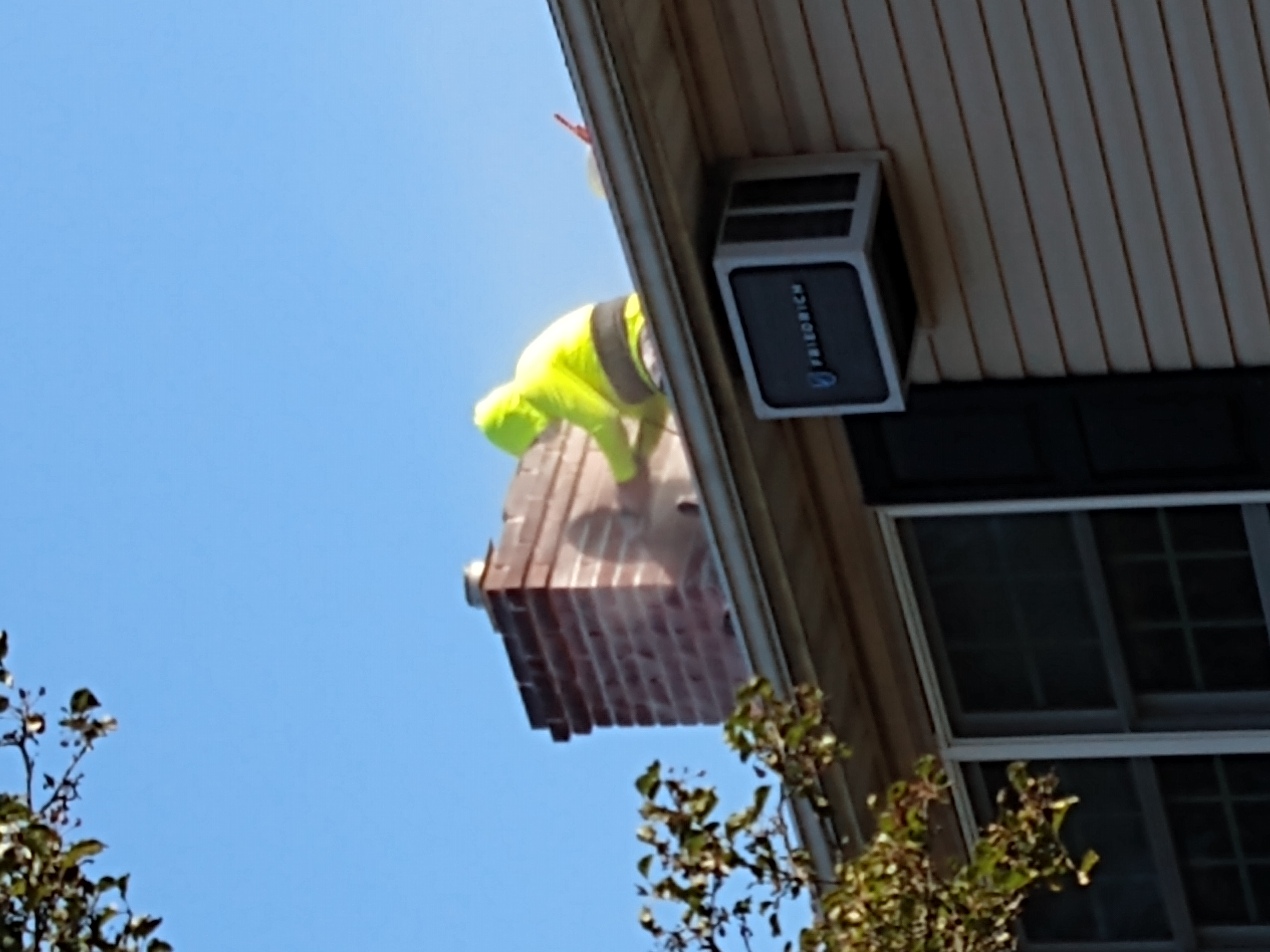
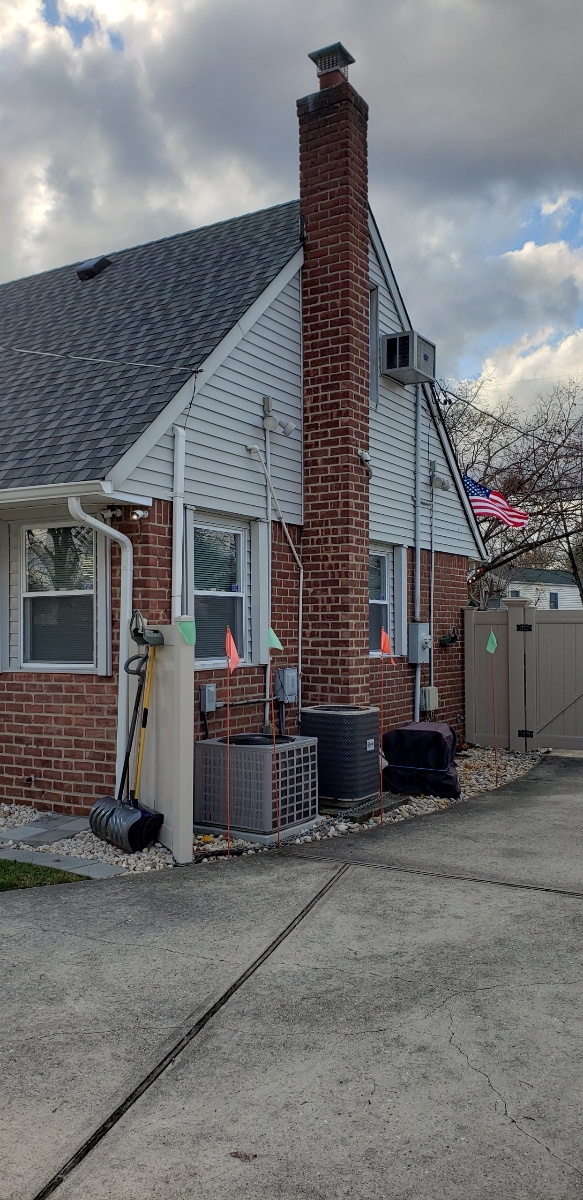
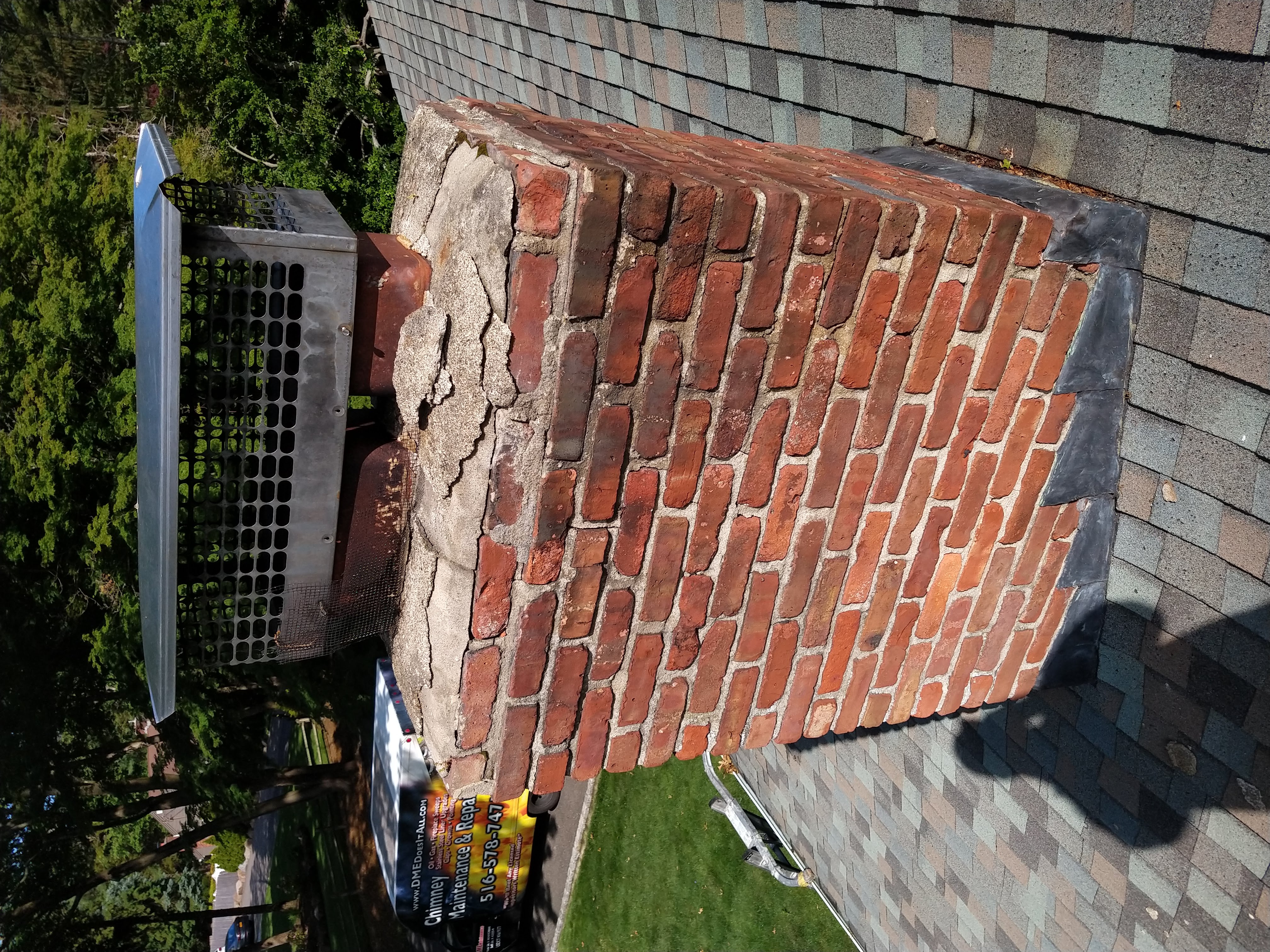
Chimneys on Long Island face a relentless cycle of weather that most homeowners don't fully appreciate until damage appears. The mortar joints holding your chimney's bricks together gradually weaken from freeze-thaw stress, salt spray from nearby water bodies, and the constant expansion and contraction that comes with our seasonal swings. In Merrick, where homes range from mid-century construction to newer builds, chimney deterioration is remarkably common. Water seeps into these failing joints and expands when it freezes, pushing bricks outward and creating cracks that grow larger each winter. Pointing and tuckpointing address this problem directly by removing old, crumbling mortar and installing fresh material that restores both the structure's strength and its ability to shed water.
The difference between pointing and tuckpointing comes down to finishing technique, though both accomplish the same core goal. When we perform pointing work, we rake out deteriorated mortar to a consistent depth and fill the joint completely with new material. Tuckpointing takes that a step further by creating a subtle visual line down the center of the joint, which gives your chimney a cleaner, more refined appearance. Residents of Merrick often choose tuckpointing when their chimneys are visible from the street, since the aesthetic improvement enhances curb appeal alongside the functional repair. Either method requires skill and attention to detail. The mortar must be packed firmly into the joints with no voids or gaps. Improper installation leaves pockets where water can still penetrate, defeating the purpose of the work.
Merrick homeowners with oil-fired heating systems rely on their chimneys year-round, making pointing work especially critical. Oil burners produce acidic combustion byproducts that corrode mortar over time, accelerating the deterioration process beyond what you'd see with a decorative or unused chimney. When mortar fails, moisture penetrates the chimney wall and can eventually reach the interior of your home through brick. You might notice water stains on walls adjacent to the chimney, damp spots in the attic, or actual water dripping inside during heavy rain or snowmelt. These signs often appear long after the mortar has started failing, which is why catching the problem early through inspection saves money and prevents secondary damage to insulation, framing, and interior finishes.
Spring and early summer represent the ideal window for pointing work on Long Island. Freshly applied mortar needs dry conditions to cure properly and develop full strength. Rain during the curing period washes out unset mortar or prevents it from bonding correctly to the surrounding brick. The warmer temperatures and lower humidity of spring and early summer accelerate the curing process, allowing the work to harden completely before autumn rains arrive. Homeowners in Merrick who schedule pointing work during these months can rest confident that their repair will be fully solid and weather-resistant long before the next winter freeze. Delaying the work into fall or winter often leads to extended curing times, incomplete hardening, and potential frost damage to fresh mortar. Planning ahead ensures your chimney is protected when you need it most.
The freeze-thaw cycles that characterize Long Island winters create constant stress on chimney mortar. Water enters the brick and mortar during thaw periods, then expands as temperatures drop below freezing. This expansion exerts outward pressure that slowly pushes bricks apart and forces mortar out of the joints. Repeat this cycle fifty, a hundred, or two hundred times across a harsh winter and spring, and the cumulative damage becomes severe. Homes in Merrick built in the 1950s through 1980s often have original mortar that has already endured decades of this punishment. Many of these chimneys are now at the critical point where pointing becomes urgent rather than optional. Waiting another season or two risks more serious structural failure, which requires much more extensive and expensive repair work.
Deteriorating mortar also invites moisture problems that extend well beyond the chimney itself. Water that infiltrates through failed joints can wick sideways into the surrounding brick and into the interior masonry structure of your home. From there, it can travel downward into basement walls or outward into attic spaces. In older homes on Long Island, this hidden moisture often leads to mold growth, structural rot, and serious indoor air quality issues that don't become obvious until substantial damage has already occurred. Residents of Merrick dealing with damp basement smells or mysterious water stains should have their chimney mortar inspected immediately. The chimney may be the source of the problem, even if water seems to be coming from another direction. Addressing the chimney stops the water entry at its source.
The proximity of many Merrick homes to Long Island Sound and local bays means saltwater air accelerates chimney deterioration beyond the inland experience. Salt crystals deposit on brick surfaces and in mortar joints, drawing moisture and promoting chemical breakdown of the mortar itself. Properties in North Merrick closer to water features face even more aggressive salt exposure. These homeowners often notice mortar deteriorating faster than expected and benefit from more frequent inspections and preventive pointing work. Standard mortar formulations break down more quickly in salt-laden environments, which is why using the correct mortar type and density matters significantly. Understanding your specific location's exposure allows you to anticipate maintenance needs rather than react to failures.
Based on Long Island, DME Maintenance has been a familiar name to homeowners throughout Merrick since 2001. We know the housing stock in Merrick well — the mix of older oil-heat homes and more recent gas conversions — and we come prepared for both.
At DME Maintenance, we've served Merrick and Nassau County, NY homeowners since 2001, giving us deep familiarity with the chimney challenges that define this region. Douglas Eberling built this company on the principle that preventive maintenance and quality craftsmanship save homeowners far more money than ignoring problems until emergency repairs become necessary. We perform pointing and tuckpointing work by hand, using traditional techniques that respect the character of older masonry while delivering modern durability. DME Maintenance takes time to match mortar color and composition to existing work, ensuring repairs blend smoothly with the surrounding brick and don't stand out as patches. This attention matters both for appearance and function, since mismatched mortar can actually accelerate future deterioration if the new material differs too much from what surrounds it.
Spring is the season when pointing work should be on your maintenance radar. If you've noticed mortar crumbling from your chimney, water stains near the base, or loose bricks, don't wait for the problem to worsen over winter. Call DME Maintenance at 516-690-7471 today to schedule a chimney inspection. DME Maintenance will assess the condition of your mortar, identify problem areas, and explain what pointing work will accomplish for your specific situation. Merrick residents who act now will have their chimneys fully repaired and protected before next winter arrives. Contact us soon—spring scheduling fills up quickly, and summer is the optimal time to complete this critical work.